Joachim Lindgren of Statholdergaarden on Ingredients, the Kitchen, and Time Pressure
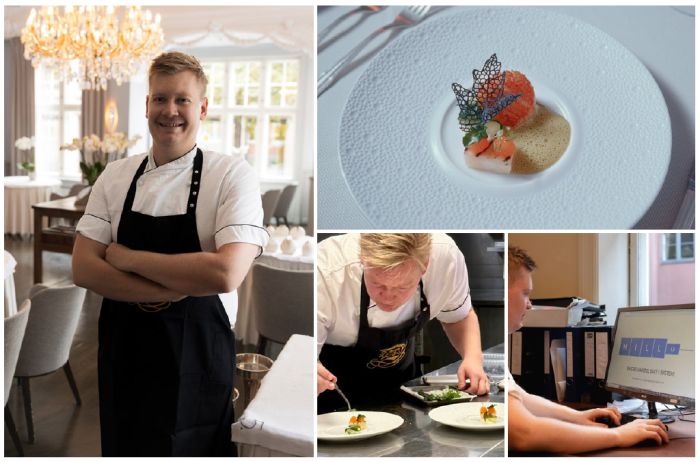
At Statholdergaarden in Oslo, the kitchen hums with precision, pace, and passion. Here, in one of Norway’s most renowned restaurant establishments, we find Joachim Lindgren – the sous-chef who knows there’s no pause button when you’re playing in the top league of the restaurant world.
Efficient Restaurant Operations: “Time Never Stops in the Kitchen”
“Time never stops. We can’t pause it,” says Lindgren. For him, efficiency is about creating space to train apprentices, to develop personally, and to continuously refine the craft.
From Procurement to Plate: How Statholdergaarden Uses Millum
In 1998, Statholdergaarden earned one star in the Michelin Guide – a mark of quality they work daily to improve. A key part of this is the ordering process. Today, all orders are placed through Millum, a procurement system developed over 20 years in close dialogue with customers and their needs.
“With Millum, we have all our suppliers in one place. I click through, create the order, and send it off. If I can save five seconds here, it quickly becomes five minutes there – and five minutes can turn into half an hour,” he says.
The time he saves is reinvested in the kitchen, in the guests, in the apprentices, and in gastronomy.
Trust in Suppliers: Ensuring Ingredient Quality
For Lindgren, ingredients are the foundation of what they deliver. “The suppliers know us and understand what we expect. It’s wild to think about how many people are involved just so we can serve the perfect scallop. It requires trust at every level,” he says.
Between Craft and Technology: The Future of Restaurant Operations
Although the daily focus is on the guests, Lindgren is aware of the need to focus on efficient operations and cost control. Millum contributes to this, and he sees the system as more than just a procurement tool: “It’s the link that creates overview, control, and sustainable choices throughout the value chain,” he explains.
For Lindgren, the future lies in the small everyday choices – in service work, in training apprentices, and in collaboration with suppliers.
“I believe the key lies in interaction. Between technology and craftsmanship, between supplier and chef, between tradition and innovation. And at the center are the guests. Always.”